
If you've been dealing with a stubborn injury that just won't settle, you may have come across shockwave therapy. It's often recommended for persistent tendon and heel pain, but does it actually work, or is it just another treatment promising more than it can deliver?
As physiotherapists, we'd rather give you an honest answer. Shockwave therapy can be helpful for certain conditions, particularly persistent plantar heel pain, but it's not a miracle cure. Whether it's right for you depends on your injury, how long you've had symptoms and what other treatments you've tried.
Here's what you need to know before booking an appointment.
What is shockwave therapy?
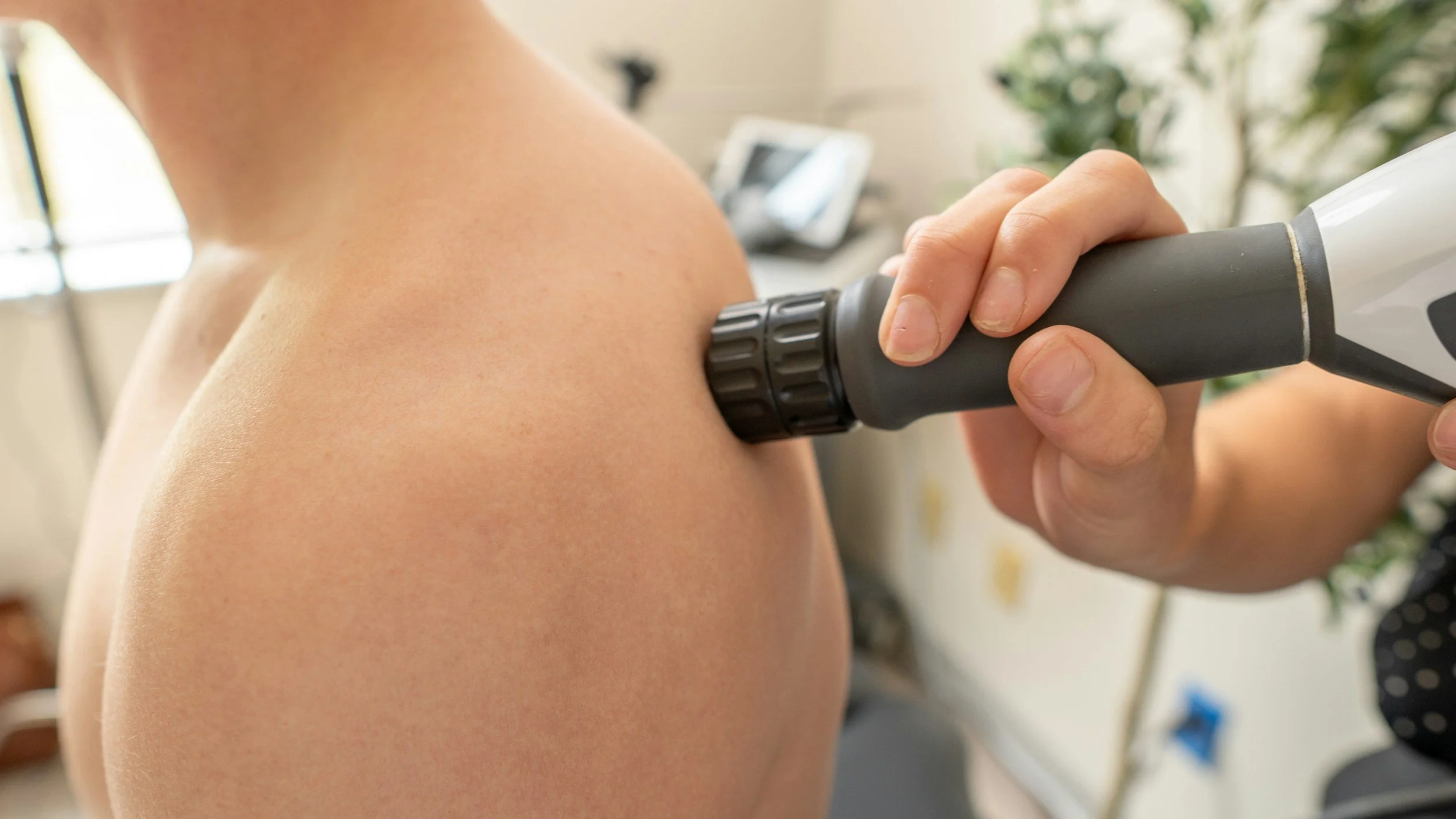
Shockwave therapy is a non-invasive treatment that uses acoustic pressure waves delivered through a handheld device to a specific area of the body.
Your physiotherapist applies a treatment head to the skin, usually with a small amount of gel to help the waves travel effectively. The treatment delivers pulses to the affected area.
The aim is to stimulate a response in the tissues and help manage persistent pain. Exactly how shockwave therapy produces its effects is still being investigated, and results vary depending on the condition and treatment approach.
Unlike surgery or injections, shockwave therapy doesn't involve breaking the skin.
Does shockwave therapy actually work?
The short answer is yes, for some conditions and some people.
Research suggests that shockwave therapy can be particularly useful for persistent plantar fasciitis (also called plantar fasciopathy). However, the evidence is less consistent for other tendon conditions.
It's important to understand that shockwave therapy isn't guaranteed to work, and it shouldn't replace a properly planned rehabilitation programme.
Here are three conditions where it may be considered:
1. Plantar fasciitis
Plantar fasciitis causes pain around the heel and underside of the foot. It's particularly noticeable during the first few steps in the morning or after sitting for a while.
Shockwave therapy is one option for persistent plantar heel pain, particularly when symptoms haven't improved with appropriate exercises and other conservative treatments.
2. Achilles tendinopathy
Achilles tendinopathy causes pain, stiffness and sometimes thickening around the tendon at the back of your ankle.
Shockwave therapy is sometimes considered as part of treatment, although the research is mixed. A progressive strengthening programme remains an important part of rehabilitation.
3. Tennis elbow
Tennis elbow causes pain around the outside of the elbow, often when gripping, lifting or twisting.
Shockwave therapy may be considered in selected persistent cases, but research has not consistently shown that it outperforms placebo treatment. Your physiotherapist should discuss the uncertainty and alternative options with you.
How many shockwave therapy sessions will I need?
Most treatment plans involve around 3–6 sessions, although this depends on your condition, symptoms and response to treatment.
Sessions are commonly spaced approximately one week apart, but your physiotherapist will recommend an appropriate schedule.
You may notice changes after a few sessions, but improvements can take longer. The goal isn't simply to reduce pain during treatment. It's to help you return to the activities you enjoy.
Your treatment plan may also include:
Targeted strengthening exercises.
Stretching and mobility work where appropriate.
Advice on managing activity levels.
Gradually returning to running, sport or everyday activities.
Does shockwave therapy hurt?
This is probably one of the most common questions we hear.
You may feel some discomfort during treatment, particularly if the area is already sensitive. Most people describe the sensation as a series of strong tapping or pulsing sensations.
The intensity can usually be adjusted to your tolerance. You shouldn't feel that you have to tolerate unbearable pain to get a benefit.
Some temporary soreness, redness or tenderness afterwards is possible. Your physiotherapist will explain what to expect and how to manage this.
How much does shockwave therapy cost?
The cost depends on the clinic, the type of shockwave equipment used and whether treatment is included within a wider physiotherapy appointment.
It's worth asking whether your appointment includes an assessment, treatment and a rehabilitation plan rather than simply paying for the machine-based treatment itself.
At our Edinburgh clinic, we can discuss the most appropriate treatment options and costs following an initial assessment.
Is shockwave therapy right for you?
Shockwave therapy isn't suitable for every injury. Before recommending it, a physiotherapist should assess your symptoms, medical history and activity levels.
We also want to understand why the problem has persisted. Treating the painful area without addressing the factors contributing to the injury may mean the problem keeps returning.
In many cases, the best results come from combining appropriate hands-on treatment, progressive exercise and advice with shockwave therapy where indicated.
If you're struggling with persistent heel pain, Achilles pain or tennis elbow, we'd be happy to help you understand your options.
Find out more about our shockwave therapy treatment in Edinburgh.
Ready to get moving again?
Don't let persistent pain keep you from the activities you enjoy.
